Pregnancy planning
Assessing risks in advance — especially if the family has hereditary conditions or the partners are related.
iIt all begins
with family
Turn the sound on — music will play in the background.
It all begins
with family
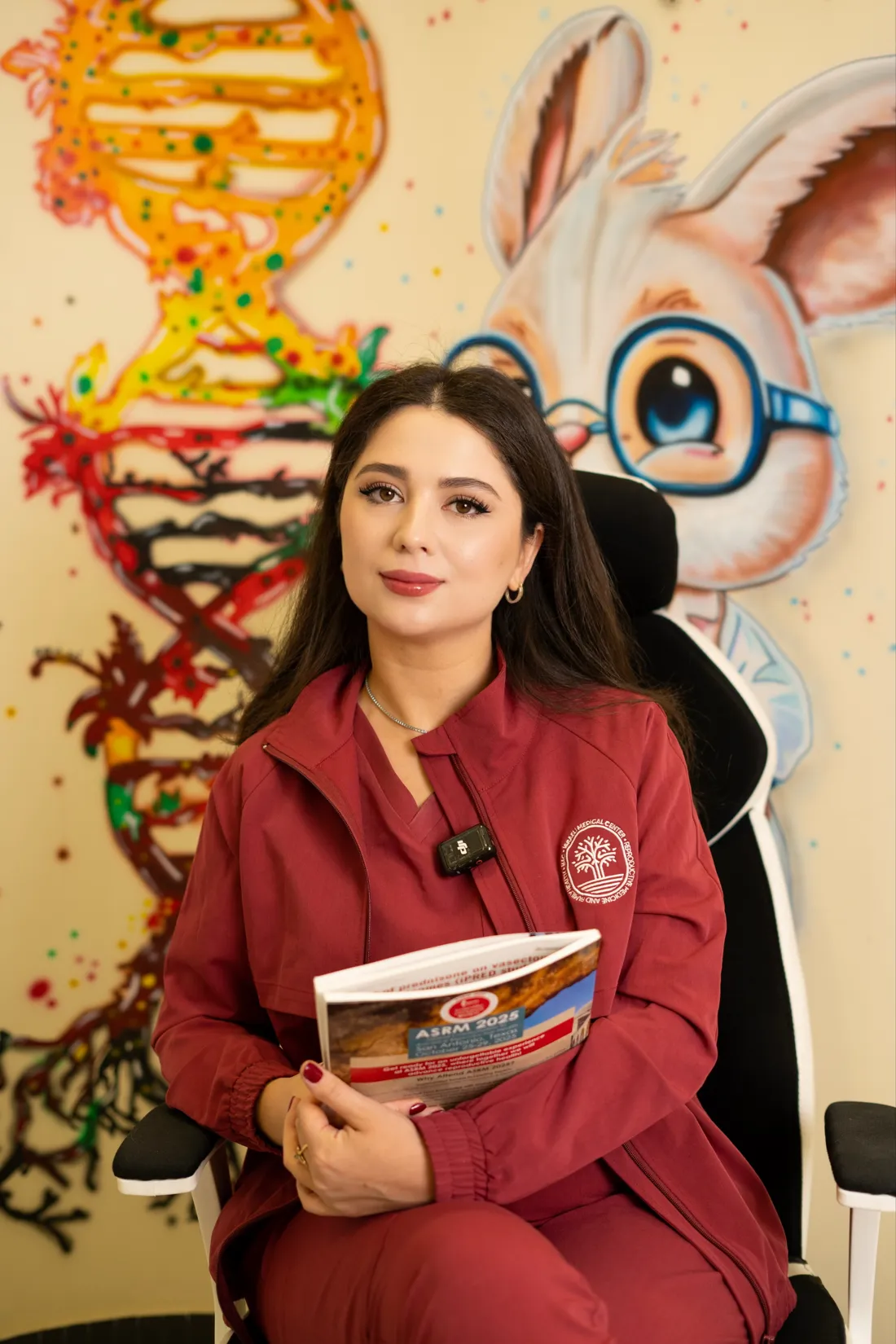
Dr. Yokutkhon Sirojiddinovna Khamdamova is a first-category medical geneticist. I help families understand their genetic risk, choose the most informative tests and plan the birth of a healthy child.
or call—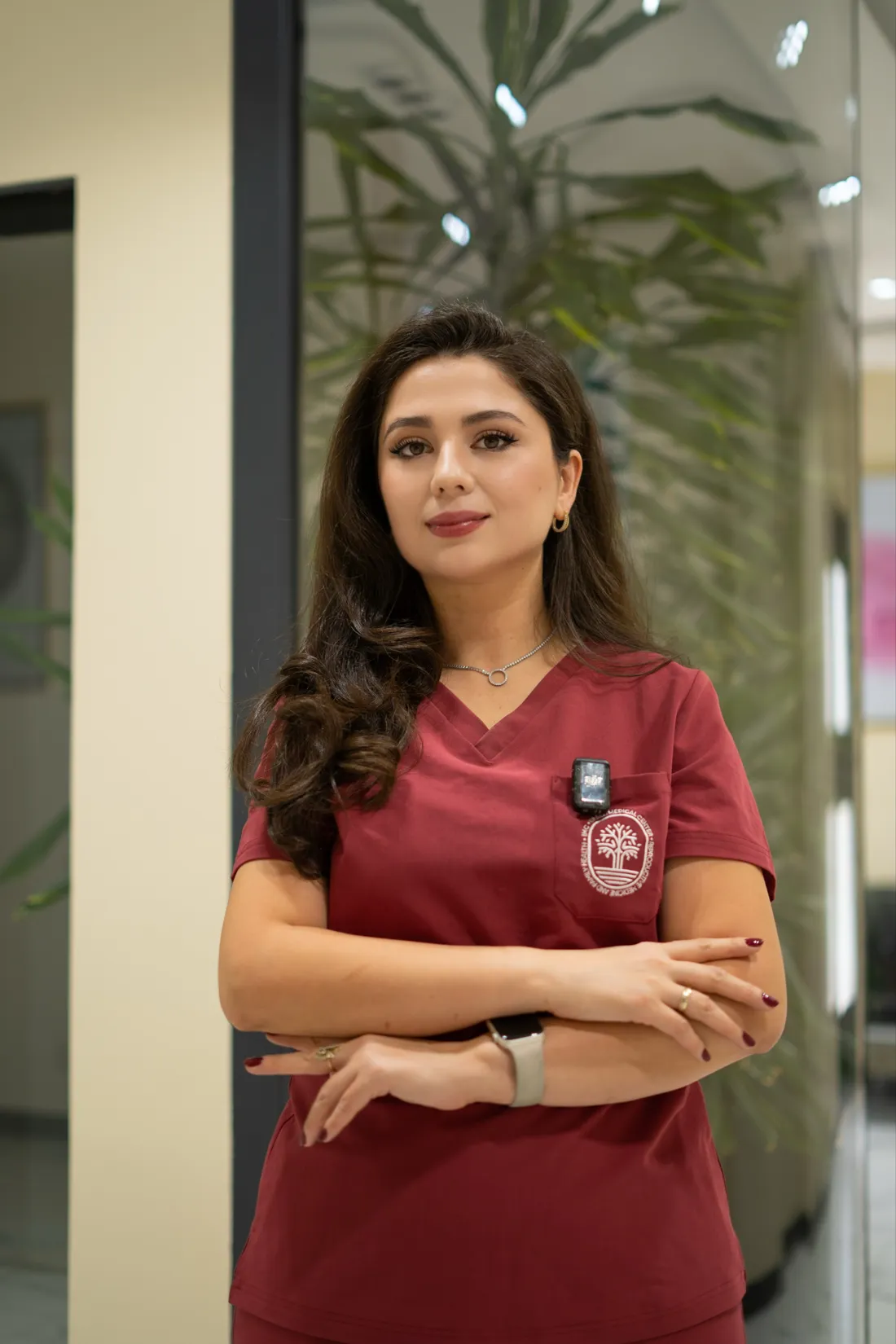
iAbout
Medical geneticist and cytogeneticist: diagnosis of hereditary and chromosomal disorders and congenital anomalies, assessment of genetic and reproductive risks.
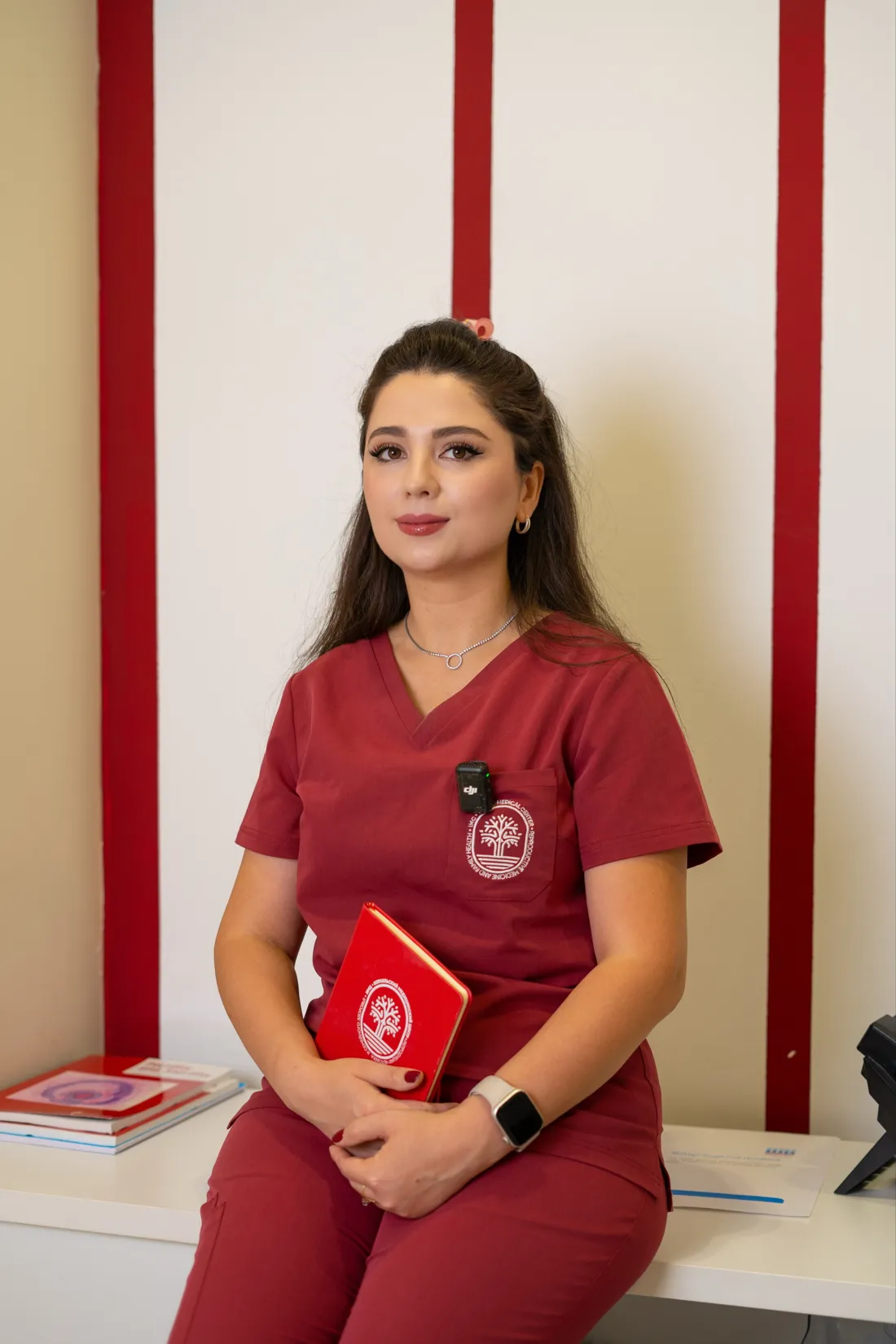
Since 2018 she has worked in maternal and child genetic counseling and screening. Today she is a geneticist at the screening department of the Republican Center for Maternal and Child Health and consults at the Israeli Medical Center (IMC) and Two Line EKO clinic.
iiIn the office
iiiServices
Assessing risks in advance — especially if the family has hereditary conditions or the partners are related.
iHigh-risk screening results or ultrasound findings: we review the result and decide whether prenatal diagnosis is needed.
iiDevelopmental delay, congenital anomalies, syndromes and rare diseases — we choose the right tests.
iiiKaryotype, FISH, chromosomal microarray, DNA tests — I explain in plain words what comes next.
ivRecurrent reproductive loss, preparation for IVF and other assisted reproduction — with genetics in mind.
vIf the same diseases run in the family or the partners are related, we assess the risk for future children.
viTap Iksi — she will play a melody from DNA
ivFor kids
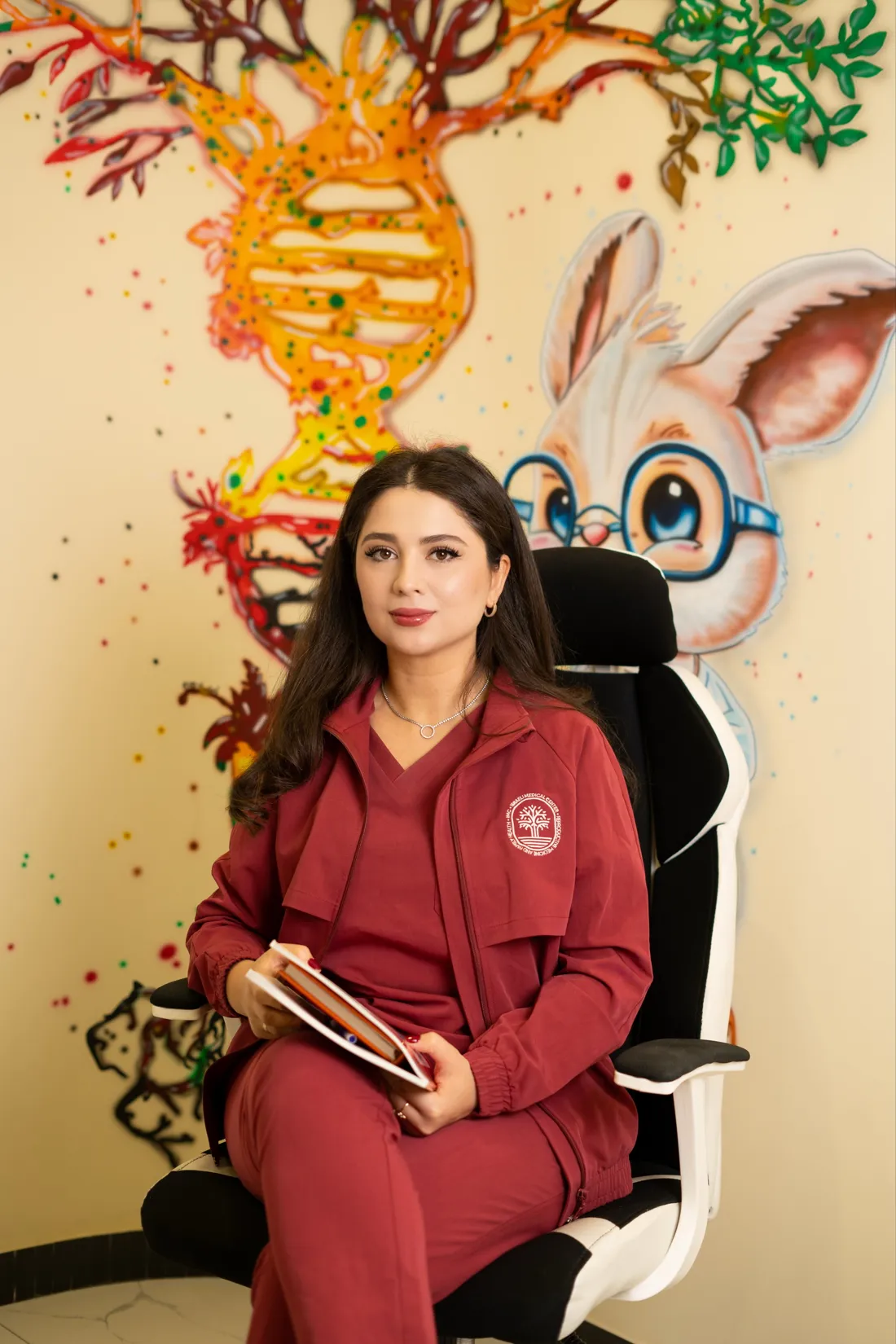
Hi! This is Iksi, a little chromosome. Every person has 46 of them. Iksi will tell you how a visit to Dr. Yokutkhon goes — and why there is nothing to be afraid of.
The doctor will talk with your mom, your dad and you. You can bring your favorite toy.
The doctor will see how you are growing: your height, hands and feet. It doesn’t hurt at all.
Sometimes we need a drop of blood or a cotton swab from inside your cheek — it’s very quick.
The doctor will explain everything to your parents and tell them what to do next. And you did great!
vPatient journey
Leave your contacts and briefly describe your question. We will pick a clinic and a time and tell you which documents to bring.
At the visit we draw your family tree together: who had which illnesses and how pregnancies went. This is the basis of genetic counseling.
We study test results, ultrasound and screening reports and discharge summaries. No documents? We start with a conversation.
We determine your family’s individual genetic risk — honestly and in plain words.
If needed, we order the most informative test. No unnecessary tests.
We go through the result and make a plan: what to do next and how to plan the birth of a healthy child.
The main goal
To determine a family’s individual genetic risk, choose the most informative testing strategy and help the family plan the birth of a healthy child.how I work
ATP7B gene · 13q14.3
viResearch
Since 2024 — PhD research in medical genetics at the Tashkent Pediatric Medical Institute.
viiEducation
Medical genetics, rare diseases, neuromuscular disorders and modern molecular genetic diagnostics.
viiiReviews and blog
From the blog: the doctor explains genetic conditions in plain words — @dr.genetik_yoqutxon (in Russian and Uzbek)
ixFAQ
Not necessarily, but a consultation is useful when planning a pregnancy, if the partners are related, after pregnancy loss or if screening showed an increased risk. Often a single visit relieves the worry.
No. Screening estimates probability; it does not make a diagnosis. At the consultation we go through the numbers and decide whether confirmatory testing is needed.
Everything you have: test results, ultrasound and screening reports, discharge summaries and other doctors’ conclusions. If the question is about a child, please bring the child if possible.
Yes. The doctor reviews reports from different laboratories and explains what they mean for your family.
No. We choose only the tests that will actually answer your question. Sometimes no tests are needed at all.
The price depends on the clinic and the amount of documents. You will be told the exact price when booking.
xBooking
We reply within one working day. You can also call or message right away.